Hair Loss Doesn’t Have to Be
the End of the Story.
The Revive Protocol combines a Wharton’s Jelly–derived tissue product + Platelet-Rich Plasma (PRP) as part of a physician-directed treatment plan designed for men experiencing early to moderate hair thinning.
$2,999
THERAPY SESSION
$1,499 — 50% OFF when combined with any FUE
No surgery. No linear scar.
- Las Vegas, NV
- Mon–Sat 8am–5pm PT
- NeoGraft®
- $2.50 per Graft
- Las Vegas, NV
- Mon–Sat 8am–5pm PT
- NeoGraft®
- $2.50 per Graft
What’s Inside
The Revive Protocol
7 Components. One Personalized Treatment Plan.
The Biology
Wharton’s Jelly-Derived Allograft
Lab-screened Wharton’s Jelly-derived tissue product administered to the scalp as part of a physician-directed treatment plan. Ethically sourced from donated umbilical cord tissue.
PRP Hair Support Treatment
Autologous platelet-rich plasma drawn and concentrated from the patient’s own blood — administered alongside the Wharton’s Jelly-derived tissue product for supportive growth-factor delivery.
The Program
Scheduled Follow-Up
A single physician follow-up around the 9–12 month mark to review your response — with milestone photo check-ins along the way.
Progress Photo Tracking
Standardized-lighting grid imaging at every milestone — your results, documented.
MD-Guided Recommendation
Physician review of your scalp map and a recommended treatment cadence before booking.
Post-Treatment Care Guide
Step-by-step home protocol for the first 90 days — what to do, what to avoid, when to call.
Follow-Up Review
A scheduled follow-up with our clinical team reviews your progress — plus direct support whenever you need it.
A Comprehensive Hair Restoration Strategy.
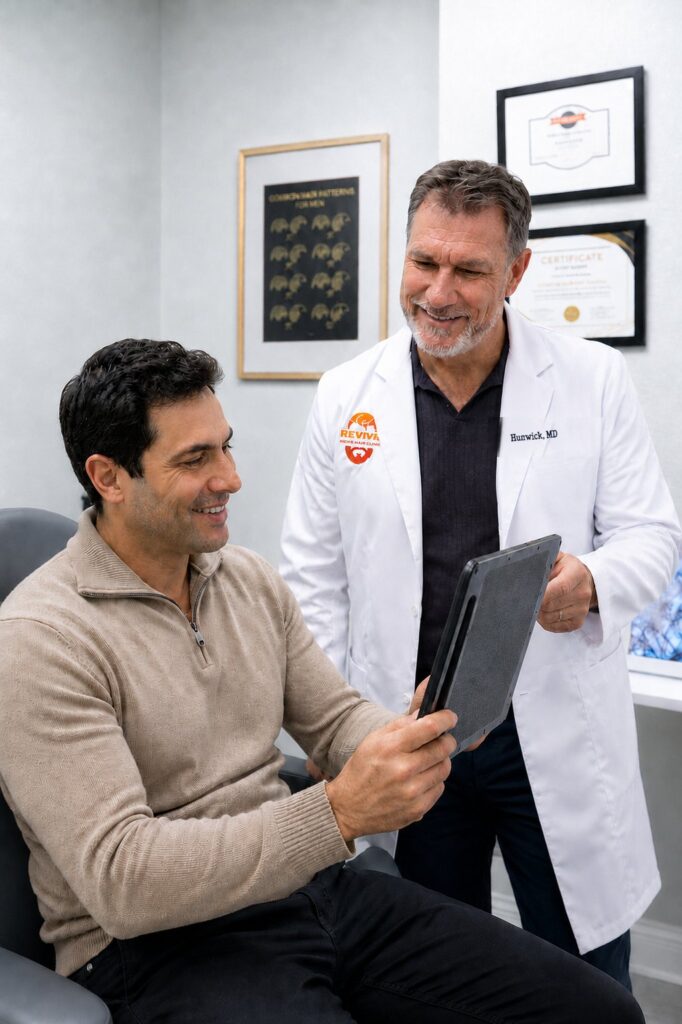
Hair thinning affects more than appearance — it can impact confidence and how you feel about yourself every day. For men who aren’t ready for surgery, The Revive Protocol offers a physician-directed, non-surgical option that combines PRP with an optional Wharton’s Jelly–derived tissue product as part of a personalized treatment plan.
Rather than simply covering thinning areas, this treatment is intended to support the overall scalp environment in patients who still have existing hair follicles. It may be appropriate for men with early to moderate hair loss who are looking to maintain existing hair, complement a hair transplant, or explore non-surgical treatment options before considering surgery.
Every patient begins with a comprehensive consultation to determine candidacy, discuss realistic expectations, and review all available treatment options. If we believe another approach — such as medication, PRP alone, or FUE hair transplantation — is better suited to your goals, we’ll tell you. Our focus is on recommending the treatment that offers the most appropriate path for your individual situation, not simply the most expensive one.
Because successful hair restoration starts with honest guidance, individualized care, and realistic expectations — not one-size-fits-all promises.
The Revive Experience
Personalized Care From Consultation to Follow-Up. At Revive Men’s Hair Clinic, we believe your experience should be just as exceptional as your treatment. From your first consultation through your follow-up appointments, our team is committed to providing honest guidance, individualized care, and a comfortable, professional environment every step of the way.
Every treatment begins with a comprehensive evaluation of your hair loss pattern, scalp health, medical history, and goals. If you’re a candidate, we’ll develop a personalized treatment plan tailored to your specific needs. If another option is more appropriate — whether that’s medication, PRP, FUE hair transplantation, or simply monitoring your hair loss — we’ll explain why and help you make an informed decision.
Your treatment is performed in our modern, physician-directed clinic using established protocols and meticulous attention to patient comfort. After your visit, you’ll receive detailed post-treatment instructions, scheduled progress check-ins, and ongoing support from our clinical team to help monitor your results over time.
How We Measure Success
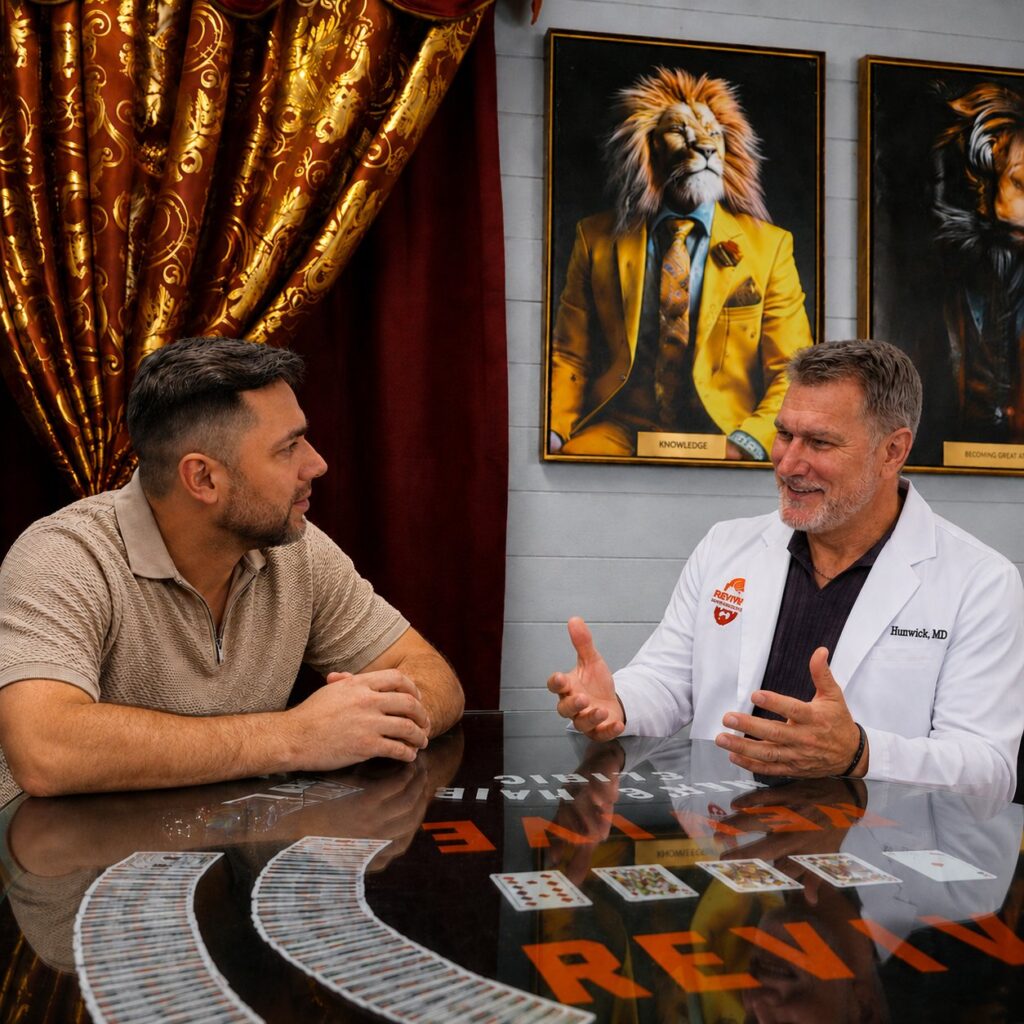
At Revive, we measure success by more than the treatment itself. We believe it comes from building trust, setting realistic expectations, and delivering the level of care every patient deserves — from your first visit to your final follow-up.
- Trust built before treatment begins
- Realistic expectations, stated plainly
- Care through your final follow-up
Understanding Wharton’s Jelly
Why It’s Included in The Revive Protocol
Wharton’s Jelly is a specialized connective tissue found within the umbilical cord that naturally contains a rich extracellular matrix, structural proteins, and naturally occurring signaling molecules. These components have become an area of ongoing research in regenerative medicine for their potential role in supporting tissue repair and the body’s normal healing processes.
As part of The Revive Protocol, an optional Wharton’s Jelly–derived tissue product is combined with Platelet-Rich Plasma (PRP) to create a comprehensive, physician-directed treatment plan for selected patients experiencing hair thinning. While research in this field continues to evolve, this treatment is intended to support the scalp environment as part of an individualized hair restoration strategy — not replace established therapies or create new hair follicles where none exist.
Every patient receives a thorough medical evaluation before treatment to determine whether this option is appropriate based on their pattern of hair loss, scalp condition, medical history, and treatment goals. Our philosophy is simple: provide clear information, honest expectations, and recommend the treatment that is most appropriate for each individual patient.
A Smarter
Middle Step
Designed to fit between stand-alone PRP and FUE hair transplantation, it provides a personalized non-surgical approach.
How It Works
Your Treatment in 6 Steps
Simple. Personalized. Physician-Directed. From your initial consultation to your follow-up, every step of The Revive Protocol is designed to provide a straightforward, comfortable experience with realistic expectations and individualized care.
01
First Step
Consultation & Hair Assessment
Your journey begins with a comprehensive consultation where we evaluate your hair loss pattern, scalp condition, medical history, and treatment goals. We’ll discuss all available options and determine whether The Revive Protocol is appropriate for your individual needs.
02
Second Step
Personalized Treatment Planning
If you’re a candidate, we’ll develop a customized treatment plan tailored to your stage of hair loss. You’ll receive a detailed explanation of the procedure, expected recovery, potential benefits, limitations, and post-treatment recommendations so you can make an informed decision.
03
Third Step
Treatment Preparation
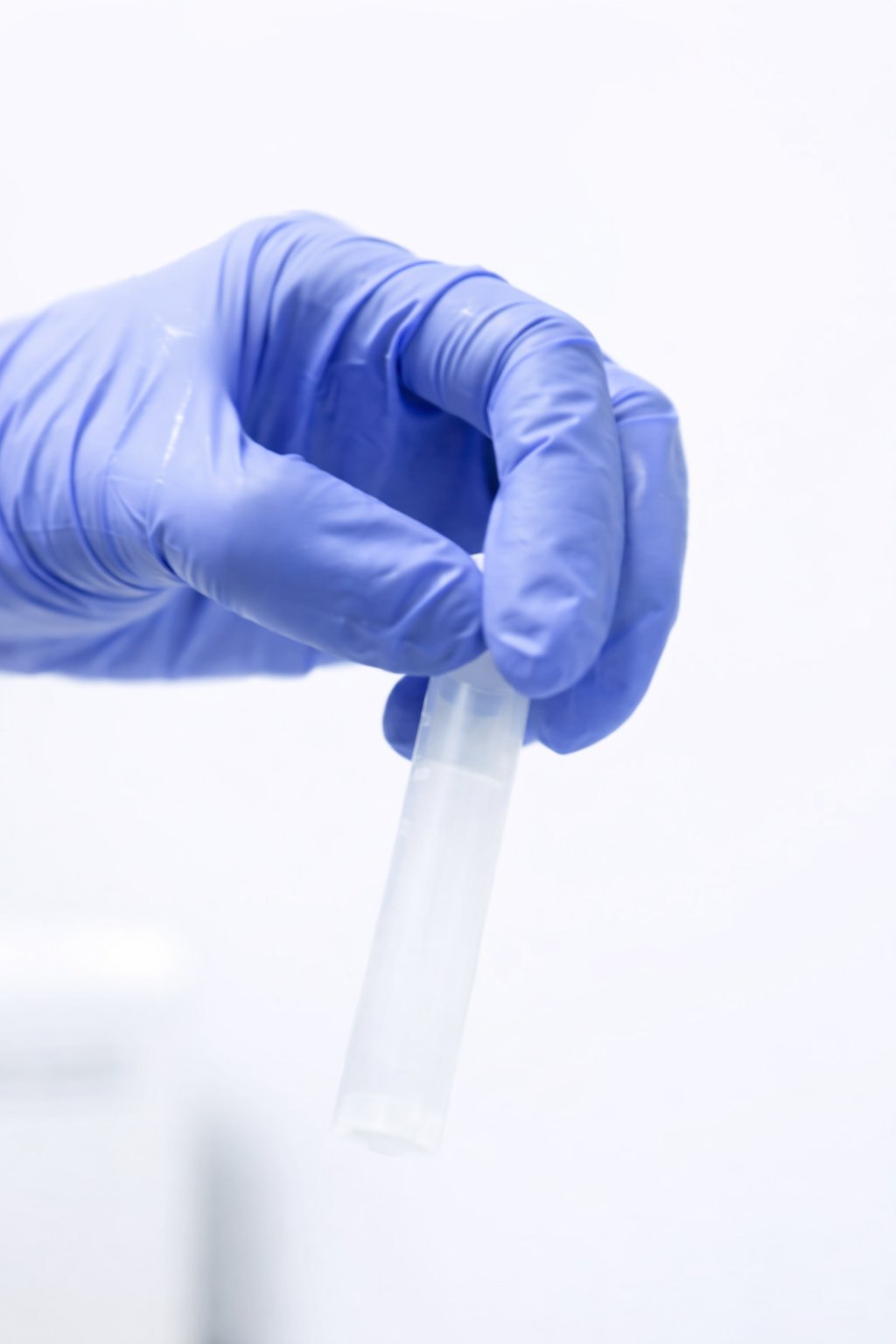
On the day of your procedure, a small sample of your blood is collected to prepare Platelet-Rich Plasma (PRP). The optional Wharton’s Jelly–derived tissue product is prepared according to the manufacturer’s handling instructions before treatment begins.
04
Fourth Step
Targeted Scalp Treatment
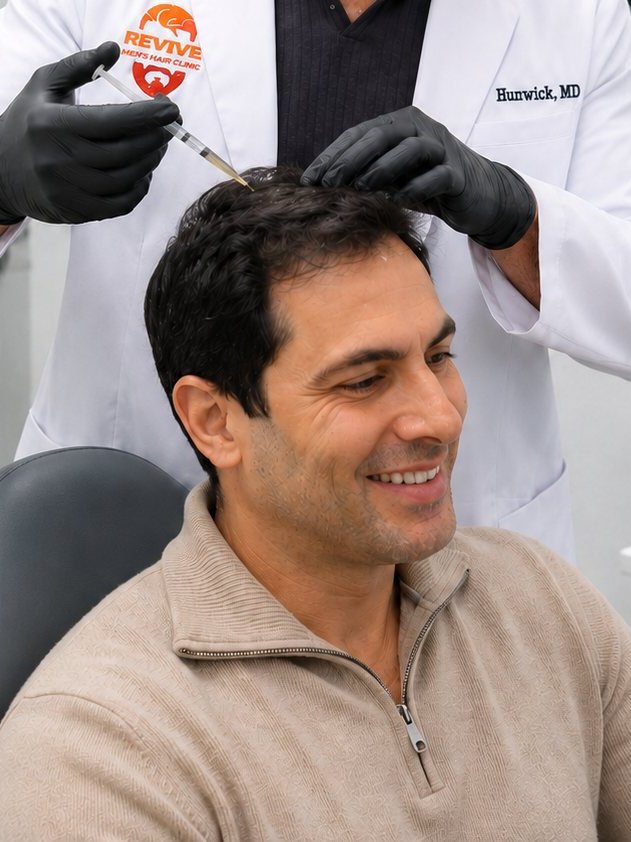
Using a series of precise injections, PRP and, if selected, the Wharton’s Jelly–derived tissue product are administered to targeted areas of the scalp according to your personalized treatment plan. The procedure is performed in our office and typically takes approximately 60–90 minutes.
05
Fifth Step
Recovery & Aftercare
Most patients return to normal daily activities shortly after treatment. You will receive detailed aftercare instructions, including guidance on washing your hair, exercise, medications, and activities to avoid during the initial recovery period.
06
Sixth Step
Progress Monitoring
Hair restoration takes time. We’ll schedule follow-up evaluations and progress photos to monitor your response and discuss whether additional treatment or complementary therapies may be appropriate based on your individual results.
Realistic Expectations. The Revive Protocol is intended for carefully selected patients experiencing early to moderate hair thinning. Individual responses vary, and improvement cannot be guaranteed. During your consultation, we’ll explain what this treatment may — and may not — be able to achieve based on your specific pattern of hair loss, helping you make an informed decision with confidence.
Ideal for Men
Looking to Stay Ahead
of Hair Loss
The Revive Protocol is designed for men experiencing early to moderate hair thinning who want to explore a non-surgical treatment option before hair loss becomes more advanced. Because every patient’s hair restoration journey is different, treatment begins with a comprehensive evaluation to determine whether this approach is appropriate for your individual needs and goals.
This treatment may be considered for men who:
- Are noticing early signs of thinning and want to address hair loss before it progresses.
- Still have existing hair follicles in the treatment area and are looking to support their overall hair restoration plan.
- Prefer a non-surgical option with minimal interruption to their daily routine.
- Want to complement an FUE hair transplant as part of a comprehensive physician-directed treatment strategy.
- Are seeking a personalized treatment plan with realistic expectations, ongoing follow-up, and professional guidance.
Revive — Pricing
Hair Restoration Pricing
Invest in Confidence
Foundation
The Revive Protocol
Wharton’s Jelly-derived tissue allograft with PRP
$2,999
All-inclusive package
50% OFF THE REVIVE PROTOCOL
Best Seller
NeoGraft® FUE + The Revive Protocol
A comprehensive hair restoration package designed to complement your personalized treatment plan.
$2.50/graft
+ The Revive Protocol at 50% off — $1,499 instead of $2,999
Most Advanced
ARTAS® iX FUE + The Revive Protocol
AI-guided robotic FUE + The Revive Protocol combined — robotic precision with regenerative support.
$4/graft
+ The Revive Protocol at 50% off — $1,499 instead of $2,999
All prices include applicable taxes · Flexible financing options are available
Wharton’s Jelly-derived allograft therapy for hair restoration is investigational and is not approved by the U.S. Food and Drug Administration (FDA) for the treatment of hair loss. Individual results vary, and no specific outcome can be guaranteed.
Our 5-Star Reviews
Great staff, experience and so helpful with all the step by step and follow ups
Great place !! Amazing staff ! Doctor was very detailed on the process , also Tony went above and beyond and does everything to make sure your fully comfortable throughout entire process .. the girls working there are also amazing at their job,.. every single person at this location was the best!! Highly recommend them , .. very professional, friendly and everyone here knows what they’re doing !!
I am one week post-procedure from my hair transplant and stem cell therapy, and keep reminiscing on the outstanding care and attention to detail they have here. I was very nervous walking in for my much anticipated appointment but everyone on the team was quick to make me feel comfortable, which I quickly did! Everything is explained thoroughly, staff is highly professional and very experienced in translplants- they use FUE procedure for anyone curious and stem cell therapy is done with clinical grade Wharton Jelly. I'm looking forward to the rest of my process in this hair journey and am very happy I chose this clinic over any other!
Patient experience, testimonials and outcomes may vary.
Your Best Hair is Ahead of You.
Schedule your complimentary, no-obligation consultation today. Our team is ready to design your personalized restoration plan.